
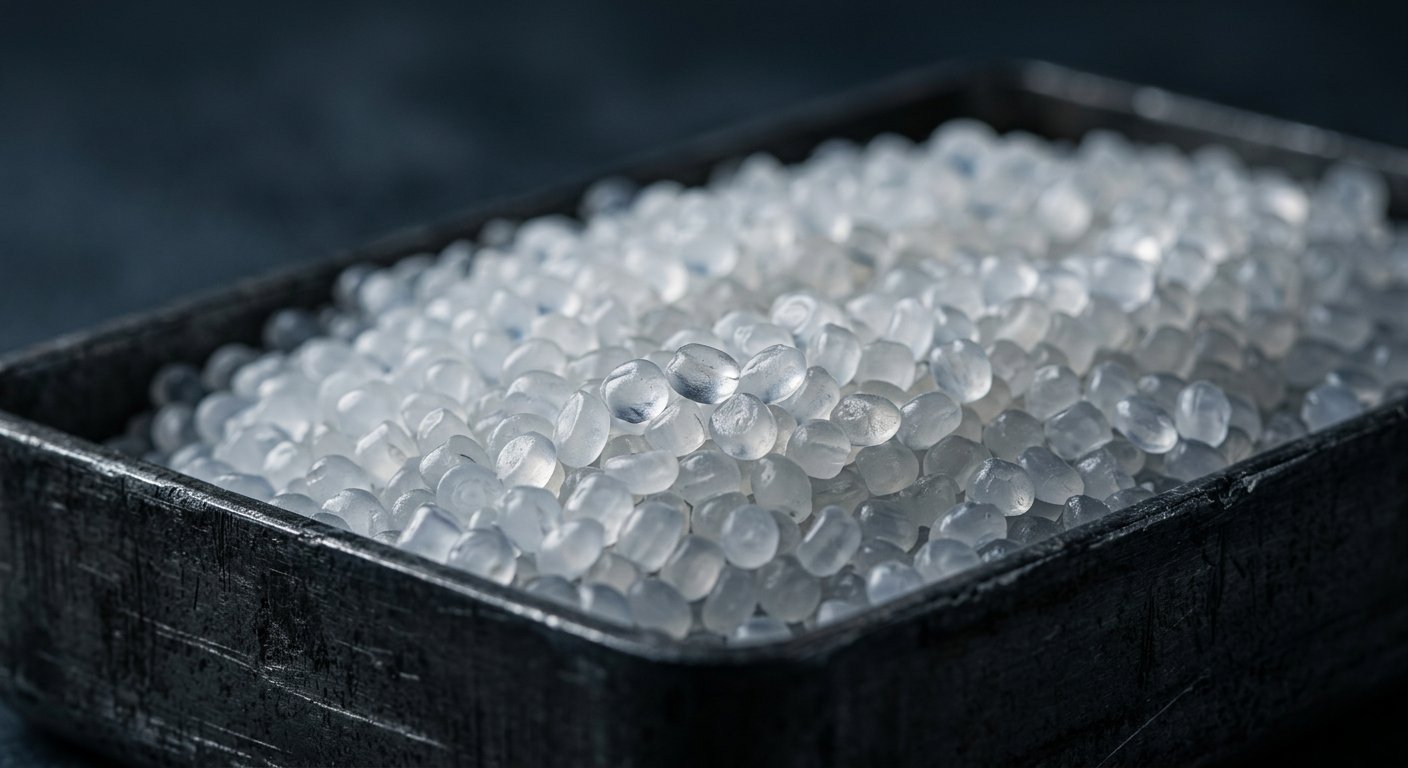
Polyethylene is traded in three principal families — HDPE, LDPE and LLDPE — each with distinct density ranges, molecular structures and processing behaviour. Converters select the family first, then the grade within it.
| Family | Indicative density | Structure | Typical applications |
|---|---|---|---|
| HDPE | 0.940 – 0.965 g/cm³ | Linear, little branching | Pipe, blow moulding, injection, raffia, caps |
| LDPE | 0.915 – 0.935 g/cm³ | Highly branched | Film, extrusion coating, lamination |
| LLDPE | 0.915 – 0.940 g/cm³ | Linear with short branches | Stretch/garbage film, rotomoulding |
Note. Density ranges are indicative for orientation; certified values are grade-specific and provided in the manufacturer TDS.
Film applications dominate polyethylene demand: LDPE offers optical clarity and easy processing, LLDPE offers toughness and down-gauging potential, and the two are frequently blended. Pipe grades (PE80/PE100) and blow-moulding grades sit almost entirely within HDPE. As with polypropylene, an RFQ should state the application, processing method, MFR/MFI and packaging requirements.